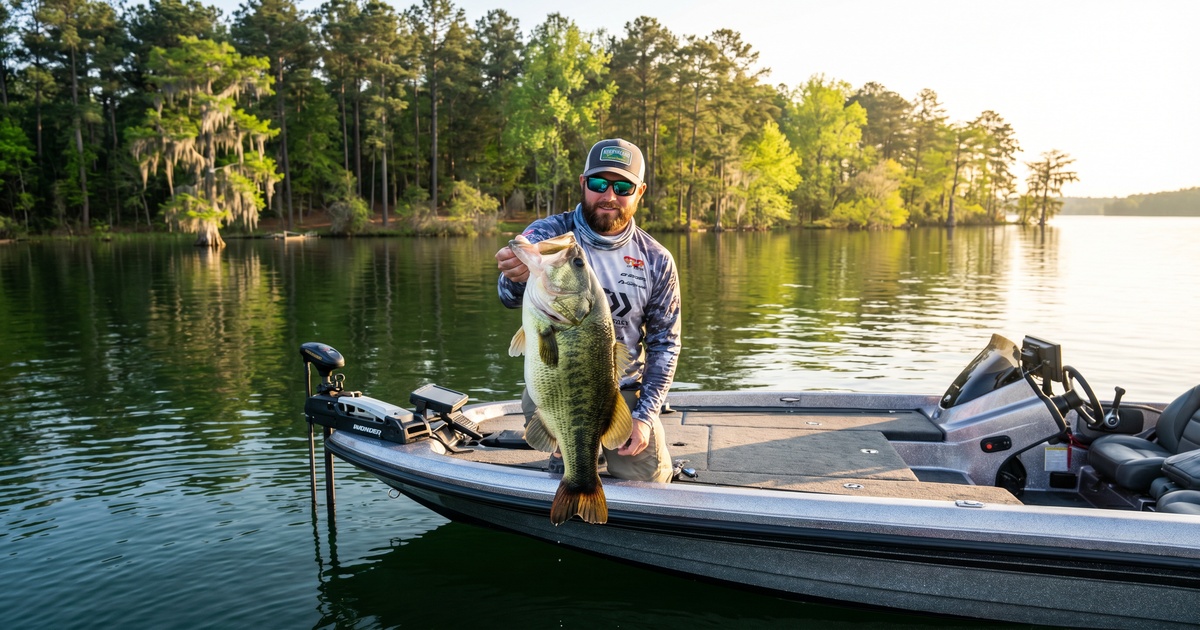
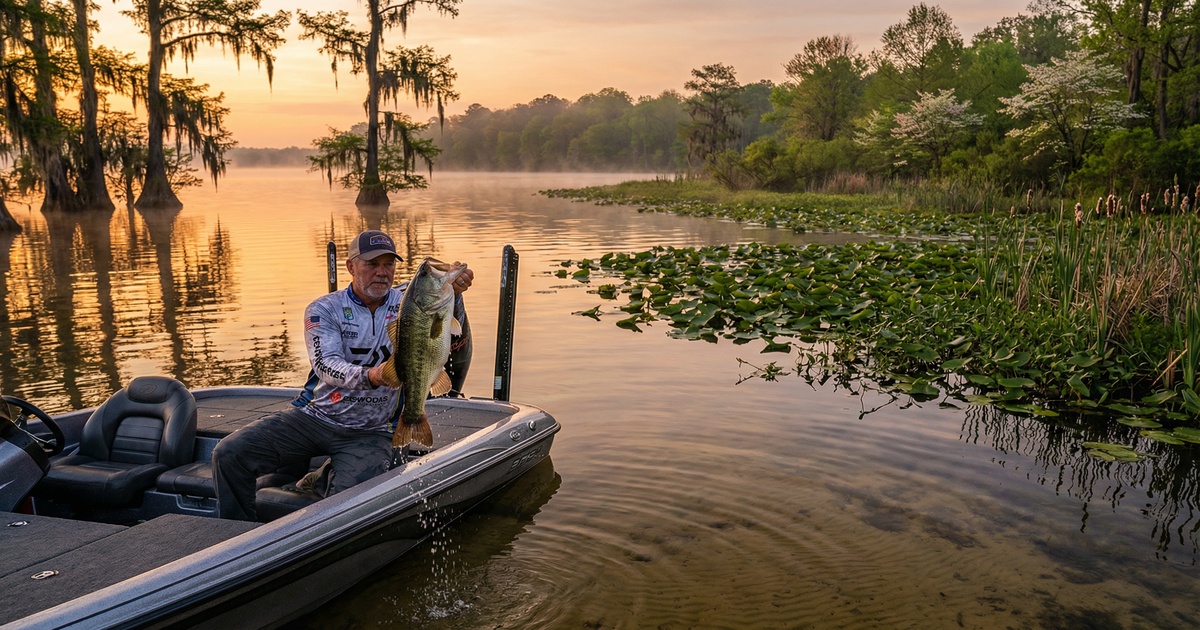
Every spring, largemouth bass across the Southeast and Midwest go through the most dramatic behavioral shift of their entire year — and most anglers fish it wrong. They show up at the lake when beds are visible, pitch swimbaits at cruising fish that refuse to eat, and leave frustrated. The anglers who consistently load the boat understand that the spawn isn't a single event. It's a three-act story, and the biggest fish often show up in Acts One and Three.
Here's how to fish all three phases in spring 2026.
Understanding the Spawn: Timing, Temperature, and Triggers
Water temperature is the master switch. Largemouth bass begin moving shallow and feeding aggressively when water temps climb into the low-to-mid 50s°F. By the time you're seeing 58–62°F on your thermometer, the pre-spawn feeding binge is in full swing. Actual spawning — when bass fan beds in shallow, hard-bottom areas — typically occurs between 62°F and 75°F, with the sweet spot around 65–68°F.
In the Southeast — think Lake Okeechobee (FL), Clarks Hill Reservoir (GA/SC), Sam Rayburn (TX), and Kentucky Lake (TN/KY) — expect spawn activity to peak from late February through April. In the Midwest — Lake Erie's bass fisheries, Rend Lake (IL), Lake of the Ozarks (MO), and Lake Erie's Western Basin (OH) — the spawn typically hits late April through early June, sometimes bleeding into June if spring runs cold.
Spring 2026 has followed a warmer-than-average weather pattern across the South through February, which means early spawn activity on Okeechobee, Seminole, and Guntersville Lake (AL) could kick off two to three weeks ahead of historical averages. Watch water temps closely — this year's timing will reward the prepared.
What Triggers the Move Shallow
Three factors align to trigger the spawn:
- Water temperature reaching the 58–75°F range (phase-dependent)
- Photoperiod — lengthening daylight hours signal the bass's endocrine system regardless of air temps
- Stable or rising barometric pressure after a cold front has passed
Barometric pressure matters more than most anglers realize. A sustained high-pressure window after a late-winter front is often the green light that pushes bass from deep wintering areas toward spawning flats. Check HookCast's real-time barometric pressure trends before your spring trips — a 48-hour stable or rising pressure window is one of the strongest indicators that the pre-spawn feed is about to ignite.
Pre-Spawn: The Best Fishing of the Year
If you fish one phase of the spawn, fish this one. Pre-spawn largemouth are aggressive, their metabolism is accelerating after winter, and the biggest females — the ones pushing 6, 8, even 10+ pounds — are actively feeding to fuel egg development. This is the window when trophy fish are catchable on power presentations.
Where Pre-Spawn Bass Stage
Pre-spawn bass don't teleport from deep water to the bank. They stage — holding on transitional structure between wintering grounds and spawning flats. Look for:
- Secondary points dropping into 8–15 feet of water adjacent to spawning coves
- Submerged creek channel bends near shallow flats with hard or gravel bottoms
- Docks and laydowns in 6–12 feet that provide cover and rapid depth access
- Bluff-to-flat transitions common on highland reservoirs like Lake of the Ozarks or Table Rock Lake (MO)
On a reservoir like Guntersville or Chickamauga (TN), pre-spawn fish often stack on the first hard-bottom point leading into a major creek arm. On natural lakes like Okeechobee, they'll be along the outside edges of emergent vegetation in 4–8 feet before pushing into the mat.
Pre-Spawn Baits and Presentations
Swimbaits and big profile baits shine here. Female bass are targeting high-calorie prey to pack on weight before the spawn. Match that with:
- Bladed jigs (ChatterBaits) in chartreuse/white or green pumpkin, worked through the water column on points. A ½ oz bladed jig with a matching paddle-tail trailer covers water fast.
- Swimbait on a heavyweight head (¾–1 oz) for deeper staging fish on reservoir main-lake points. A 5–6" paddle tail in shad colors is hard to beat on highland reservoirs.
- Jerkbaits — suspending or slow-sinking models like a Rapala Shadow Rap or Megabass Vision 110 — are lethal when water temps are still in the mid-to-upper 50s. Work them with long pauses on main-lake points.
- A-rigs (umbrella rigs) where legal — particularly deadly in the Southeast on large impoundments where shad schools are moving shallow.
Work fast. Cover water. Pre-spawn bass will chase, and the biggest fish are the most likely to eat a large, fast-moving bait right now.
During the Spawn: Fishing the Beds
Once water temps lock in above 63°F for several consecutive days, males push to the shallows first to fan nests. Females follow, and spawning occurs in water typically ranging from 1–6 feet deep on firm substrate — sand, gravel, clay, shell, or compacted mud. Bass actively avoid soft silt for beds.
Finding Beds
Sight fishing is the most visual and exciting way to target spawning bass, but it's also the most technical. On clear-water lakes — Bull Shoals (AR/MO), Lake Lanier (GA), Table Rock — beds are visible from a boat with polarized glasses. On stained fisheries like Sam Rayburn or most Midwest reservoirs, you're fishing blind.
Visible beds: Look for light-colored, cleaned-off circles of bottom in 1–4 feet. The male guards the bed; the female may be nearby but is often the larger fish positioned slightly off the nest.
Blind bed fishing: Work the inside edges of emergent grass, rocky points in 2–4 feet, shallow dock pilings, and laydowns with a methodical grid pattern.
Bed Fishing Tactics
Bed fishing is a patience game. A spawning bass that's "locked on" a bed isn't feeding — it's defending. The goal is to irritate or threaten the fish into biting.
- Shakey head with a finesse worm — Drop it directly on the bed and don't move it. Shake in place. The guarding bass will eventually pick it up to remove it.
- Texas-rigged creature bait — A Strike King Rage Bug or Zoom Z-Craw in natural colors (green pumpkin, watermelon red) fished slowly on the bed edge triggers defensive strikes.
- Ned rig — Particularly effective on pressured fish. The ElaZtech material's buoyancy keeps the tail upright on the bottom, driving bedding bass crazy.
- Drop shot — For deeper beds or lockjaw fish, a drop shot with a small finesse worm held vertically over the bed can eventually break even the most stubborn fish.
A key ethical note: Handle spawning bass gently and return them quickly. Females left off nests for even a few minutes risk losing their eggs to predators. Many serious tournament anglers avoid targeting females directly on beds — the choice is yours, but conservation matters.
Post-Spawn: Don't Abandon the Lake
Most anglers head home when spawning activity dies down. That's a mistake. The post-spawn period, while often overlooked, produces excellent fishing — you just need to know where to look and what to throw.
Immediate Post-Spawn (Recovery Phase)
Female bass are spent. After dropping eggs, they move quickly back to the nearest deep-water staging area — often the same secondary points and channel bends where they held pre-spawn. They're lethargic, recovering, and largely off the feed for 1–2 weeks. Targeting them heavily during this window is a conservation concern, and it's also largely unproductive.
Males, however, are still shallow. They guard the fry for several weeks after hatching, hovering over the ball of fry in 1–3 feet of water. These fish are aggressive and will hammer a bait presented near the fry school.
- Topwater baits work exceptionally well on fry-guarding males — a Heddon Zara Spook or Berkley Choppo walked over shallow fry balls draws explosive strikes
- Hollow-body frogs over vegetation where fry are schooled up
- Underspin or small swimbait to match the size of the baitfish the fry attract
Late Post-Spawn: The Transition Back to Structure
As water temps push past 75°F and into early summer ranges, bass begin their predictable migration toward summer patterns. This is arguably the second-best feeding window of spring, as females have recovered and are actively chasing baitfish.
On reservoirs like Chickamauga, Lake Guntersville, and Sam Rayburn, this means bass pushing out to main-lake points, submerged roadbeds, and brush piles in 10–20 feet. On natural lakes and oxbows, they'll position along weedline edges in 6–12 feet.
Topwater fishing at dawn and dusk is exceptional during late post-spawn. The bass are aggressive, water is warming, and shad are beginning to spawn on the surface — a secondary forage event that keeps largemouth looking up.
- Whopper Plopper 110 in shad patterns along main-lake points at first light
- Buzzbait burned across shallow grass flats before sun-up
- Popper along dock edges and wood cover
When the sun gets high, transition to Carolina rigs dragged along point transitions, or football jigs on main-lake ledges. HookCast's solunar activity calendar helps identify the best morning feeding windows during this phase — late post-spawn bass often key on major and minor feeding periods with notable precision.
Reading Water Temperature and Weather for Spring Success
Spring fishing is defined by instability. A 70°F day followed by a cold front that drops air temps 30°F is not unusual in March or April across the Southeast and Midwest. These fronts compress the spawn timeline, push staged fish back deep temporarily, and create the boom-bust days that confuse casual anglers.
The key principles for navigating spring weather:
- Before a cold front — Fishing improves dramatically in the 24–36 hours ahead of an incoming system. Pressure is falling, fish are active and feeding. Hit the water.
- During a front — Tough, especially in the spawn. Bedded fish may temporarily abandon nests. Staging fish drop deeper. Slow down, downsize, go finesse.
- After a cold front — Give it 48–72 hours. Once pressure stabilizes and water temps begin recovering, bass return to pre-front positions. Patience pays.
A surface temp gauge on your boat and a reliable weather app with pressure trending are the two most important tools in your spring arsenal beyond your rod and reel.
Spring 2026 Regional Outlook
Southeast: With February running warm, expect early spawn activity on Florida's Harris Chain, Lake Okeechobee, and Georgia's Lake Seminole by mid-March. Guntersville and Chickamauga in Alabama and Tennessee should peak in April. Target pre-spawn fish now — they're already on the move.
Midwest: Lake of the Ozarks, Rend Lake, and Carlyle Lake (IL) typically see pre-spawn staging in March and April, with beds appearing in May. Lake Erie's Western Basin smallmouth spawn (a bonus species for Midwest anglers) runs concurrently with largemouth on many impoundments. Watch for late-season cold snaps in April that can delay Midwest spawn timing by 1–3 weeks.
Both regions: The post-spawn topwater window is not to be missed. As bass recover and summer patterns approach, the month of May — in most years — delivers some of the most explosive shallow-water action of the entire calendar year.
The bass spawn rewards anglers who understand biology over those who simply show up with a bait. Get on the water early in spring 2026, find the staging fish, and adjust your tactics as the season progresses through each phase. The biggest largemouth of your season are already moving. Don't miss them.
FAQ
What water temperature triggers the pre-spawn feeding binge in largemouth bass?
Largemouth bass begin moving shallow and feeding aggressively when water temperatures climb into the low-to-mid 50s°F. The pre-spawn feeding binge is in full swing by the time temps reach 58–62°F, making this the prime window to target trophy fish on power presentations.
When should I expect the spawn to peak in my region?
Timing varies significantly by location. In the Southeast (lakes like Okeechobee, Sam Rayburn, and Kentucky Lake), spawn activity typically peaks from late February through April. In the Midwest (Lake Erie, Rend Lake, Lake of the Ozarks), expect peak spawn activity from late April through early June. Note that warmer-than-average conditions in 2026 may push Southern spawn activity two to three weeks earlier than historical averages.
Which phase of the spawn offers the best fishing opportunities?
The pre-spawn phase is widely considered the best fishing of the year. Bass are aggressive, their metabolism is accelerating after winter, and the largest females are actively feeding to fuel egg development. This is the window when trophy fish are most catchable on power presentations.
What factors trigger bass to move from deep water toward spawning areas?
Three key factors align to trigger the spawn: water temperature reaching the appropriate range for each phase (58–75°F), lengthening daylight hours (photoperiod), and stable or rising barometric pressure following a cold front. A 48-hour window of stable or rising pressure after a late-winter front is one of the strongest indicators that the pre-spawn feed is about to ignite.
Why do many anglers struggle to catch bass during the spawn?
Most anglers make the mistake of treating the spawn as a single event rather than a three-phase process. They arrive when beds are already visible and target actively spawning fish — which are notoriously difficult to entice into feeding — rather than focusing on the aggressive pre-spawn and post-spawn phases when bass are actively hunting and far more likely to bite.