Cobia Season in the Mid-Atlantic: Virginia Beach to the Chesapeake Bay Bridge-Tunnel
It's mid-May. You're idling through the inlet at sunrise, coffee still hot, scanning the surface. Then you see it — a dark, torpedo-shaped shadow cruising just below the chop, maybe two feet down, completely unbothered. Your buddy spots it at the same time. Nobody says a word. You just reach for the rod.
That's cobia fishing in the Mid-Atlantic. And if you've never done it, you're missing one of the most visual, heart-pounding fisheries on the East Coast.
Every spring, cobia migrate north along the Atlantic seaboard, and Virginia Beach sits right in the middle of the best of it. The Chesapeake Bay Bridge-Tunnel — a 17.6-mile fixed link crossing the mouth of the Chesapeake Bay — acts like a giant aggregation point, stacking fish in ways that are almost unfair. Almost. You still have to know what you're doing.
Here's what years of chasing these fish up and down the coast taught me about getting it right.
When Cobia Show Up — And Why It's Not Random
Cobia don't wander north by accident. Their migration is driven by water temperature, and in the Mid-Atlantic, that timing is predictable enough to plan a season around.
The Temperature Window
The trigger is surface water temperature reaching 68°F to 72°F. Below that range, you might spot a scout fish here and there, but the main push hasn't arrived. Once temperatures cross that threshold and hold, fish stack up fast.
In Virginia Beach, that window typically opens between late April and mid-May, with peak action running through June. A warm spring can push fish into the area by the third week of April. A cold, late spring can delay it to the last week of May. Either way, the fish come — the calendar just shifts.
NOAA's sea surface temperature charts are worth checking weekly once you hit late April. You're looking for that 68-degree threshold to establish itself along the coast from Cape Hatteras northward.
Why Virginia Beach Specifically?
Cobia follow the Continental Shelf and warm, Gulf Stream-influenced water as they push north. Virginia Beach and the mouth of the Chesapeake Bay form a natural funnel. The fish are moving north, they're looking for structure and forage, and the Bridge-Tunnel is sitting right there like a welcome mat.
The warming waters of the lower Bay also pull fish inside once the migration peaks. By late May and early June, cobia are staging around the mouth of the Bay and working their way up toward the CBBT's southern islands.
The Chesapeake Bay Bridge-Tunnel: Structure That Changes Everything
If you've never fished the CBBT, picture this: four man-made islands, 12 concrete trestles, rock riprap, bridge pilings, and underwater structure stretching across 17 miles of open water. For a fish that relates hard to structure, it's basically a resort.
Why Fish Stack Around the Pilings
Cobia are ambush feeders. They sit in the current seam next to a piling, let bait wash toward them, and eat. The CBBT creates a hydraulic squeeze — tidal flow pushing through the narrow gaps between islands and structure accelerates the current, concentrating baitfish like spot, croaker, and blue crab. The cobia follow the bait.
The tunnel islands — specifically the north and south islands of the two tunnel sections — are the primary focus for most cobia anglers. The riprap edges hold fish on both incoming and outgoing tide, and the corner transitions between riprap and open water are consistently productive.
Field note: I've watched cobia come through the CBBT so thick in the first week of June that you could pick your fish. A 30-pound fish cruising alone at 9 AM. A 50-pound fish shadowing a ray at noon. It's genuinely one of the strangest, most exciting experiences in East Coast fishing.
Tides and Positioning
Don't show up at the CBBT without checking the tide first. Cobia here are tide-driven, not just loosely influenced by it. The two most productive windows are:
- Last two hours of incoming tide — water pushing into the Bay, bait moving with it, cobia positioned on the upcurrent side of structure
- First two hours of outgoing tide — fish shift to the downcurrent side, holding in the eddy behind pilings
Slack water can be slow. Not dead — you'll still see fish cruising — but the feeding aggression drops off. That's a good time to eat your sandwich and reposition.
Check the tide charts for your area before you leave the dock. Knowing whether you're arriving on a flood or an ebb lets you set up on the right side of the structure instead of spending three hours repositioning.
Finding Cobia Away From the Bridge-Tunnel
The CBBT gets the most attention, and deservedly so. But Virginia Beach cobia fishing doesn't start and end with the tunnel. Some of the best encounters happen in less obvious water.
Open-Water Sight-Fishing
From mid-May through June, cobia cruise the surface in open water. You'll see them finning just below the surface, sometimes in pairs or small groups. This is sight-fishing in its purest form — spot the fish, make the cast, watch the eat.
Where to look:
- Nearshore wrecks — Virginia Beach has an extensive wreck field within 20 miles of the coast. In 50 to 90 feet of water, cobia hold just below the surface near the structure. Drift over the wreck, keep eyes up, and have a ready rod in hand at all times.
- Rays and sharks — Cobia commonly follow large cownose rays and small sharks. If you see a ray finning on the surface, there's a reasonable chance a cobia is within 10 feet of it. Drop a live eel or soft plastic in front of the ray, let it sink, and hold on.
- Red drum schools — When drum push into the shallows near Lynnhaven Inlet or Rudee Inlet, cobia sometimes shadow them. Don't overlook inshore structure when water temps are right.
Inlets and Back-Bay Areas
Rudee Inlet sees cobia moving through during peak migration. Fish the jetties and channel edges on incoming tide with live bait. It's not a dedicated cobia spot, but opportunistic fish have been caught from the jetty rocks by anglers who were targeting something else entirely.
Tackle, Bait, and Presentations That Actually Work
Cobia can be particular. They can also be dumb as rocks — sometimes on the same day. Having the right setup matters, especially when you're sight-fishing and have exactly one shot.
Rod and Reel Setup
| Setup | Rod | Reel | Line | Leader |
|---|---|---|---|---|
| Standard inshore | 7' MH spinning | 4000–5000 series | 30 lb braid | 60 lb fluorocarbon |
| Heavy duty | 7'6" H spinning | 6000–8000 series | 50 lb braid | 80 lb fluorocarbon |
| Bottom/anchor | 6'6" conventional | Level wind | 50 lb mono | 80 lb fluorocarbon |
Leader length matters. Cobia have rough mouths and aren't leader-shy when they're feeding, but use at least 24 to 36 inches of heavy fluoro on your terminal end. Short leaders cost fish.
Live Bait: The First Choice
If you can get live bait, use it. Cobia eat reliably on:
- Eels — Top producer at the CBBT and over wrecks. Hook through the lip and let the eel swim naturally with minimal weight.
- Blue crabs — Especially effective mid-season when crabs are shedding. Hook a peeler through the point and free-line it or fish it on a knocker rig.
- Spot and croaker — Common CBBT forage. Hook through the back behind the dorsal and let the fish do the work.
- Bunker (Atlantic menhaden) — Big bait, big fish. Best for offshore and open-water situations.
Artificials
Cobia eat artificials, especially when they're actively feeding. The proven options:
- Bucktail jigs (3/4 oz to 2 oz) with a soft plastic paddle tail — The single most versatile cobia lure on the market. Work it just under the surface on a slow retrieve with occasional twitches.
- DOA CAL shads and similar paddle tails — Rigged on a 1-oz to 1.5-oz jig head, these work well for sight-fishing over structure.
- Surface poppers — Unconventional but effective when fish are actively surface cruising. Big popper, big splash, and sometimes a cobia just loses its mind.
Pro tip: When a cobia follows your lure to the boat and doesn't commit, resist the urge to speed up. Drop the rod tip, slow down, and let the bait sink slightly. That's usually what triggers the eat. Speeding up just makes them lose interest.
Using Forecast Data for Pre-Trip Planning
Before any spring cobia trip, I check the fishing forecast for Virginia Beach to review barometric pressure trends and wind direction. Cobia respond to pressure the way most inshore fish do — stable to slowly rising pressure favors feeding. A rapidly falling barometer ahead of a front shuts the bite down fast. You might see fish, but getting them to eat becomes a completely different problem.
Standard atmospheric pressure sits at 1013.25 hPa per NOAA standards. I want to see it above that baseline and holding for at least 24 hours before a trip. Below 1000 hPa with a falling trend? I'm rescheduling.
Regulations, Gear Requirements, and Keeping Fish Legal
This is where anglers get tripped up. Pay attention.
Virginia Saltwater Regulations for Cobia
Current Virginia regulations for cobia in the Atlantic and Chesapeake Bay include:
- Minimum size: 37 inches fork length
- Bag limit: 1 fish per person per day (recreational)
- Season: Verify current dates with NOAA Fisheries and the Virginia Marine Resources Commission (VMRC) annually — regulations have tightened in recent years and mid-season closures have occurred
Regulations change. The VMRC publishes updates to their website and you can sign up for email alerts. Do it before you launch, not after.
Handling and Releasing Cobia
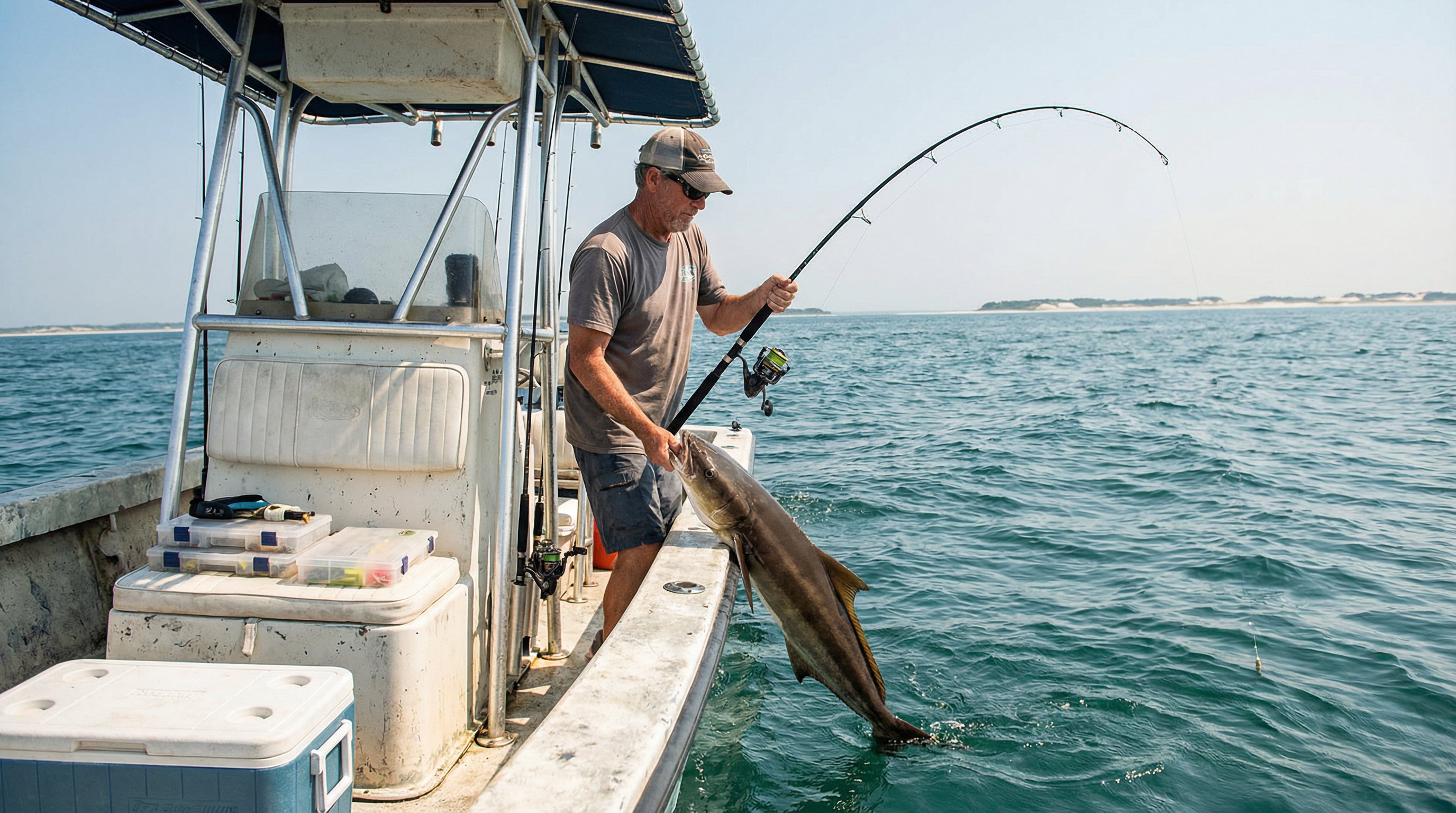
If you're releasing a fish, keep it in the water as much as possible. Cobia have strong survival rates when handled correctly. Remove the hook, hold the fish upright, and wait for it to swim off under its own power. Don't drop it and hope for the best — a fish that rolls over is a dead fish.
For fish you're keeping, have a large cooler ready with plenty of ice. Cobia are exceptional table fare — dense, white meat that holds up to grilling, blackening, or frying. Bleed the fish immediately after landing, and you'll notice the difference on the plate.
Common Mistakes That Cost Anglers Fish
After years of fishing this region and watching other boats work, a few patterns show up repeatedly.
Casting too far ahead of the fish. When sight-fishing a cruising cobia, lead the fish by 8 to 10 feet — not 20. Too far ahead and the fish swims past before the presentation is right. Too close and you spook it. Distance matters.
Anchoring on the wrong side of CBBT structure. Current direction matters more than anything else at the tunnel. If you're anchored on the downcurrent side during a strong incoming tide, your bait is blowing away from the structure. Fish the upcurrent side.
Using too-light leaders near the CBBT. There's rough concrete, barnacles, and pilings everywhere. A 30 lb fluoro leader that works fine in open water will get cut in seconds if a cobia makes one hard run toward structure. Go heavier on the leader than you think you need.
Leaving after the first hour of slow fishing. Cobia feed in windows. I've watched boats leave the CBBT at 9 AM after an hour of nothing, only for the bite to light up at 10:30. Tide, light, and water temperature conspire to create those windows. If conditions look right on paper, commit to the spot.
Not having the gaff ready. Cobia fight hard all the way to the boat. When the fish is within range, you want the gaff already in hand — not leaning against the gunwale while the fish makes another run. Be ready before the fish is.
Quick-Reference: Virginia Beach Cobia Season Checklist
Timing and Conditions
- [ ] Water temp confirmed at 68°F+ (check NOAA SST charts)
- [ ] Barometric pressure stable or rising (target: above 1013 hPa)
- [ ] Wind under 15 knots (choppy water kills sight-fishing)
- [ ] Tidal movement within your target window
Gear
- [ ] 7'+ medium-heavy spinning rod with 4000–6000 series reel
- [ ] 30–50 lb braid with 60–80 lb fluorocarbon leader, 24–36 inches minimum
- [ ] Bucktail jigs (3/4 oz to 2 oz) rigged with paddle tails
- [ ] Live eels, blue crabs, or croaker if available
- [ ] Heavy-duty gaff (at least 6 feet)
- [ ] Large cooler with ice
Location
- [ ] Check tide direction before positioning at CBBT
- [ ] Plan for both tunnel islands and open-water wreck drifts
- [ ] Scout for rays and surface-cruising fish on the run out
Regulations
- [ ] Verify current season dates with VMRC
- [ ] Confirm 37-inch fork length minimum
- [ ] Confirm 1-fish bag limit is still in effect for your trip date
FAQ
When is cobia season in Virginia Beach?
Cobia typically arrive in Virginia Beach and the Chesapeake Bay area between late April and mid-May, with peak action running through June. Timing is tied to water temperature — fish move in when surface temps consistently reach 68°F to 72°F. A warm spring can push the opener to mid-April; a cold spring may delay it to the end of May.
What is the best bait for cobia at the Chesapeake Bay Bridge-Tunnel?
Live eels are the top producer at the CBBT, followed closely by peeler blue crabs and live spot or croaker. For artificials, bucktail jigs with soft plastic paddle tails on a 3/4-oz to 2-oz head work well on active fish. The key at the CBBT is presenting bait on the upcurrent side of structure during active tidal movement.
What is the size limit for cobia in Virginia?
The minimum size limit for cobia in Virginia is 37 inches fork length, measured from the tip of the lower jaw to the fork of the tail. The recreational bag limit is 1 fish per person per day. Regulations can change mid-season based on stock assessments, so verify with the Virginia Marine Resources Commission before your trip.
Do I need a special license to fish for cobia in Virginia?
Virginia requires a saltwater fishing license for recreational anglers fishing tidal waters, including the Chesapeake Bay and Atlantic Ocean. No cobia-specific permit is required beyond the standard saltwater license. If you're fishing from a licensed charter vessel, the captain's license typically covers passengers — confirm this with your operator before booking.
How do I find cobia in open water away from the Bridge-Tunnel?
Outside the CBBT, cobia are most reliably found by scanning the surface for finning fish, large cownose rays, and small sharks — cobia frequently shadow rays as they feed along the bottom. Nearshore wrecks within 20 miles of the coast also hold fish in 50 to 90 feet of water, particularly through May and June. Drift slowly over the structure with eyes up and a rigged rod in hand, because you'll often have only seconds to make the cast.